





.svg)

Hearing loss is one of the most common and preventable risks in agriculture. But unlike physical hazards you can see, noise is invisible and often ignored or underestimated.
Hearing loss develops gradually, is painless, but once it occurs, it’s permanent.
From tractors to chainsaws, farm noise often exceeds safe exposure standards. Regular audiometric testing acts as an early warning system, detecting changes in hearing and confirming whether workplace controls are working.
It’s a simple, practical control that protects both your workers and your business.
What is audiometric testing and why is it done?
Audiometric testing is a standardised hearing test that measures a person's hearing thresholds for different sounds and frequencies. Specialised equipment measures your ability to hear the softest sounds, either on-site or at an audiology clinic.
Regular tests can detect changes in your hearing. Prolonged exposure to loud noises, such as chainsaws and heavy machinery, increases the risk of noise-induced hearing loss.
Ongoing exposure to levels above ~85 dBA and intermittent loud bursts above 140 dBA also accelerates damage.
Audiometric testing detects early signs of noise-induced hearing loss before it becomes permanent. It verifies whether existing workplace noise controls are effectively protecting workers.
It’s also an employer’s WHS duty to monitor the exposure and take appropriate risk management measures.
Causes of hearing loss in agriculture.
Hearing loss is common in agriculture because most sounds exceed 85 dBA. Day after day, you work with machinery, tools, or equipment that can damage your hearing. Without protective gear or controls, it takes a toll.
The National Rural Health Alliance found that:
- Audiometric hearing loss is present in 65% of Australian farmers aged between 15 and 75+ years.
- Young farmers are around seven times more likely to have hearing loss than the general population of the same age.
“Common farming activities often generate noise levels up to 99 dBA, with some tasks reaching 102 dBA. Agricultural tractors are a significant source of noise and difficult to mitigate due to their power requirements. Chainsaws, at 110 dBA can damage hearing in less than 2 minutes. Sledgehammering or gunshots can be 140 dBA or higher.”
Because noise-induced hearing loss progresses gradually and without pain, regular audiometric testing is a critical WHS control and monitoring measure.
What are the signs of hearing loss?
Workplace hearing loss may cause one or more of these symptoms:
- Difficulty hearing in noisy environments
- Trouble hearing phone conversations or people speaking clearly
- Frequently asking others to repeat themselves
- Sounds seem muffled or unclear
- Increasing the volume on devices such as TVs, radios, or phones
- Missing everyday sounds like doorbells or phone ringing
- Avoiding social situations due to hearing difficulties
These symptoms often develop gradually. Many people do not realise their hearing has changed until communication with others becomes consistently difficult.
Is testing mandatory across Australia?
Across Australia, most states and territories have adopted the Model Work Health and Safety (WHS) Regulations, which include specific requirements for audiometric testing.
The rule is practically the same in all WHS jurisdictions: if a worker is frequently required to wear hearing protection because noise exceeds exposure standards, the employer must provide audiometric testing.
Audiometric testing isn’t optional; it's a Work Health and Safety requirement.
How often is audiometric testing?
Under the national WHS model and most state regulations:
-
A baseline audiometric test must be done within 3 months of starting work where noise exposure means hearing protection is used.
-
A follow-up (monitoring) test must be done at least every 2 years after the baseline.
Some jurisdictions and codes of practice advise more frequent testing for workers exposed to very high noise levels. For example, this applies to exposures above 100 dB average during shifts.
Scheduling Audiometric Testing
The Safe Ag Systems Training Register can schedule and remind employees of yearly audiometric hearing checks. Set the expiry date and schedule a reminder 60 days before to avoid missing any tests. Documenting audiometric tests and keeping previous records shows your due diligence towards WHS requirements.
Controlling hearing loss in the workplace.
Need help evaluating noise risks at work? Safe Ag System offers a Risk Assessment tool to identify the level of risks from machinery, tools, and other hazards.
Once the level of risk is assessed, use the hierarchy of control to determine control measures. They are ranked from the highest level of control (Elimination) to the lowest level (PPE).
- Elimination: Eliminate noise sources by altering or halting the use of loud machinery.
- Substitution: Replace noisy equipment with quieter options.
- Engineering controls: Modify equipment or work areas to reduce noise exposure by using noise-absorbing materials or enclosures.
- Administrative controls: Limit noise exposure by rotating tasks and providing breaks away from noisy areas.
- Personal protective equipment (PPE): Provide workers with ear protection such as earmuffs, earplugs, or canal caps.
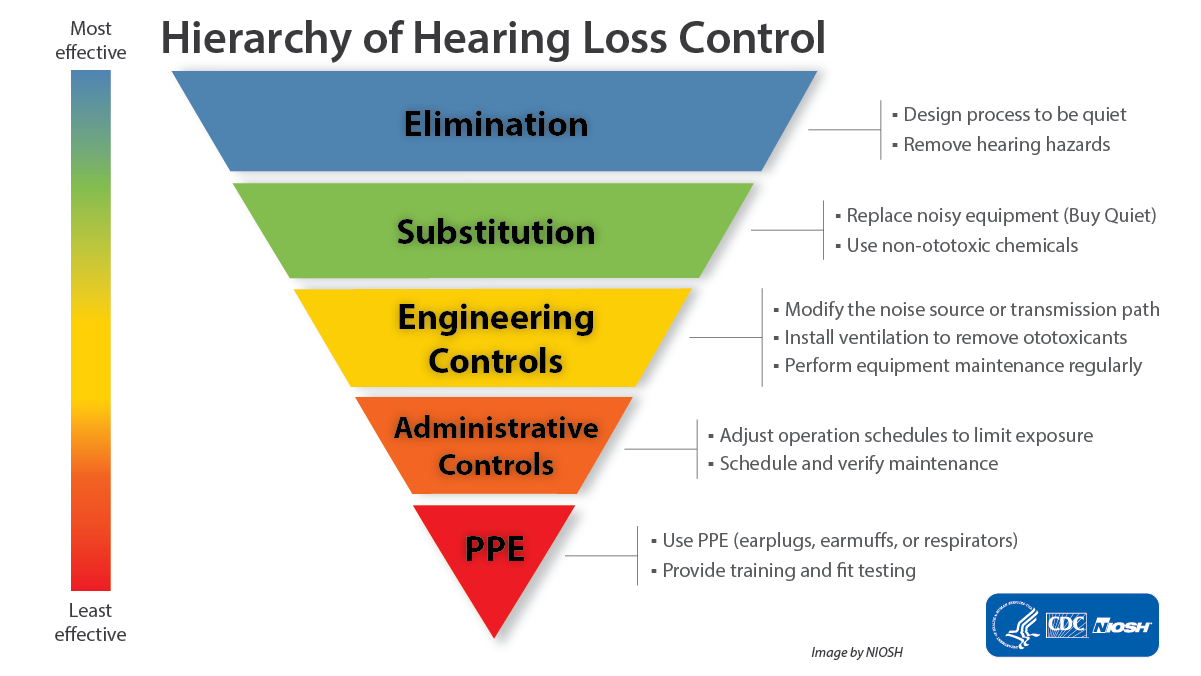
Source: https://www.cdc.gov/niosh/noise/about/chemicals.html
Noise-induced hearing loss doesn’t happen overnight. It builds slowly, shift after shift, season after season. By the time someone notices a problem, the damage is already done.
Audiometric testing gives you measurable evidence of what is happening beneath the surface. It confirms whether your controls are working and helps you act before small changes become lifelong injuries.
In agriculture, noise is part of the job. Preventable hearing loss doesn’t have to be.
Disclaimer: Content on this website may be of relevance to users outside of Australia, but content links and examples are specific to Australia. Please check with your local authority for your country and industry requirements.